Stuck on Season 9 Again? The Quiet Crisis of America's Comfort Show Habit

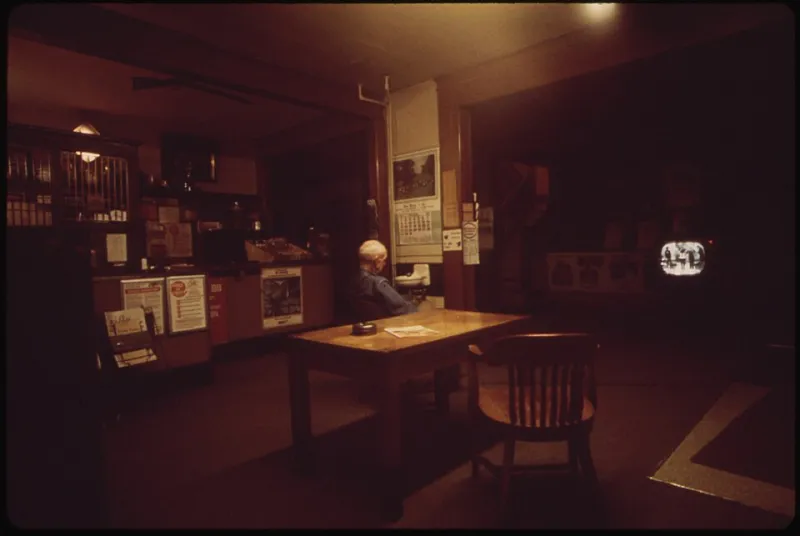
Photo: SFC Peter P. Ruplenas, Public domain, via Wikimedia Commons
Let's be honest about how most streaming nights actually go. You settle into the couch, open an app, maybe two. There are thousands of options. And forty minutes later, you're watching Michael Scott say "I declare bankruptcy" for the ninth time.
You're not lazy. You're not alone, either. Nielsen's streaming data has shown for years that back-catalog viewing — stuff like The Office, Suits, Friends, and Grey's Anatomy — routinely outperforms the shiny new releases everyone's supposed to be talking about. The rewatch isn't a guilty secret anymore. It's the default setting for American TV consumption.
The Psychology of the Familiar
There's real science behind why Parks and Rec hits different the fifth time around. Psychologists call it low cognitive load — your brain knows exactly what's coming, so there's no anxiety, no learning curve, no emotional risk. After a day of work emails and news alerts, that predictability is basically a weighted blanket.
New shows demand something from you. You have to learn names, follow plot threads, care about strangers. Rewatching asks nothing. It's the TV equivalent of ordering the same burrito you've had for a decade. Satisfying? Absolutely. Adventurous? Not even a little.
And in a post-2020 world, that trade-off feels more rational than ever. Comfort viewing spiked during the pandemic and — here's the kicker — it never really came back down.
Are the Algorithms Feeding the Loop?
Here's where it gets a little less cozy. Streaming platforms have zero financial incentive to push you toward something new when you'll happily rewatch Suits forever. The algorithm knows what you like, and what you like is the thing you've already seen. So the homepage serves you more of it, you click, the data confirms the loop, and around it goes.
It's a feedback cycle that turns taste into habit. Remember when a show like Severance or The Bear dominated the cultural conversation for a season? Those moments still happen — but they're rarer, and they're fighting against thousands of hours of frictionless familiarity stacked in your "Continue Watching" row.
The paradox is that these platforms spent billions creating original content to lure you in, then learned the real retention tool was the old stuff they license. Why gamble on a new pilot when Friends reruns are the cheapest loyalty program ever built?
What the Rewatch Economy Costs
So what's the actual damage? A few things, honestly.
Riskier shows die faster. When viewers default to the familiar, mid-budget dramas with slow burns — the Station Elevens and Deadwoods of the world — can't build an audience quickly enough to survive cancellation math.
The monoculture shrinks. Half the joy of TV used to be arguing at the office about last night's episode. When everyone's on a different lap of The Office, there's nothing new to talk about.
Talent follows the money. Writers chasing greenlights know prestige experiments are a harder sell when the data says audiences want their fourth rewatch of New Girl.
None of this means comfort viewing is wrong. But it's worth noticing that every hour spent in Pawnee, Indiana is an hour not spent giving some strange, ambitious new show a fighting chance.
Breaking the Loop (Without Going Cold Turkey)
You don't have to swear off Brooklyn Nine-Nine. Try a simple rule: one new episode for every rewatched one. Use the free trials strategically. Ask that one friend who always has weird recommendations — or check out a curated under-the-radar watchlist instead of trusting the algorithm's greatest hits.
The rewatch economy isn't going anywhere, and honestly, thank goodness. Michael Scott is forever. But the next show you'd rewatch lovingly in 2030? It's on some platform right now, quietly waiting for you to press play. Maybe give it one episode tonight.