Fifteen Seconds of Fame: How One Audio Clip Ended Up on a Million Different Videos
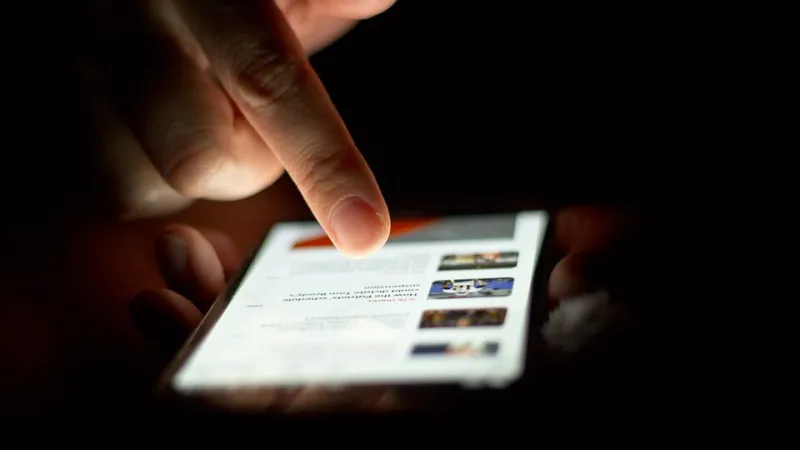
Photo: Japanexperterna.se, CC BY-SA 2.0, via Wikimedia Commons
You know the moment. You're three scrolls deep into your feed, and a sound kicks in — that synth swell, that slowed-down vocal, that one dramatic pause right before the beat drops. You don't choose to recognize it. You just do. By the fourth video using it, the audio has stopped being a song and started being wallpaper.
Welcome to the great flattening of American pop culture, where every viral moment arrives with the same pre-approved soundtrack attached.
The Assembly Line of a Viral Sound
Here's the thing most people don't realize: trending audio isn't an accident. It's a system. A clip takes off, the algorithm rewards it with reach, and suddenly every creator with a ring light and a posting schedule is racing to attach their content to it before the window closes. The sound becomes a kind of lottery ticket — use it, and maybe the algorithm's momentum rubs off on you.
The result is a strange feedback loop. Creators aren't picking music anymore; they're picking distribution. A songwriter's emotional bridge becomes a transition tool. A comedian's one-liner becomes a caption template. Nobody's listening, exactly. They're leveraging.
And the timeline is brutal. A sound can go from unknown to inescapable to cringe in about three weeks. If you're still using a trending audio in month two, you're not riding a wave — you're at the retirement party for one.
Who Gets Paid When Everyone Uses the Same Clip
The economics are weirder than you'd think. When a major label track trends, the label gets a licensing payout, and depending on the platform's deal structure, the artist sees a slice — often a surprisingly small one. Meanwhile, a viral sound can be worth more as marketing than as a revenue stream. Plenty of artists have watched their song soundtrack ten million videos while their streaming payout buys them a nice dinner.
The savvier play? Own the sound outright. Independent artists who upload original audio directly to platforms keep a bigger cut and, more importantly, keep the story. Some have built entire careers off a single fifteen-second moment — a snippet that labels wouldn't have touched five years ago becomes a record deal, a tour, a Rolling Stone profile.
But for every winner, there's a whole ecosystem of losers: session musicians whose work gets pitched down and re-uploaded without credit, smaller artists drowned out by the same three clips, and — increasingly — listeners.
The Fatigue Is Real, and the Numbers Are Starting to Show It
Ask around and you'll hear it: people are tired. Tired of hearing the same audio across a food review, a makeup tutorial, and a heartfelt storytime. Tired of songs being introduced to them in a sped-up, chipmunk-pitched version they can never escape. There's even a generational split emerging — younger users treating trending sounds like a shared language, older users experiencing the whole thing as low-grade auditory spam.
Some platforms have noticed. There's been a quiet push toward original audio, longer-form content, and features that let creators use full songs rather than the same overworked snippet. Whether that sticks is another question. The economics of the trend economy are just too efficient to abandon.
What Happens If the Soundtrack Gets Boring
Here's the uncomfortable question underneath all of this: if every viral moment sounds identical, do the moments themselves start to feel identical?
There's an argument that we're living through a sonic monoculture — a period where American pop culture, for the first time in decades, doesn't have a sound so much as a setting. The radio used to hand us a shared playlist. Now the algorithm does, and it's shorter, faster, and aggressively recycled.
But monocultures breed rebellion. The counter-movement is already visible: artists refusing to license their catalogs to short-form platforms, creators building brands around obscure or original audio, listeners hunting down full-length songs the moment a snippet catches their ear. Every trending sound eventually sends someone down a rabbit hole — and sometimes they come out the other side with an entirely new favorite artist.
So no, the fifteen-second economy isn't dying. But it might be maturing. The next wave of pop culture moments might not sound like everyone else's — and honestly, our ears could use the variety.
Until then, brace yourself. That sound you can't stand? It's got about two more weeks of dominance left. And the one replacing it is probably already recording.