Your Next Museum Trip Might Be a Costume From the Show You Binged Last Night
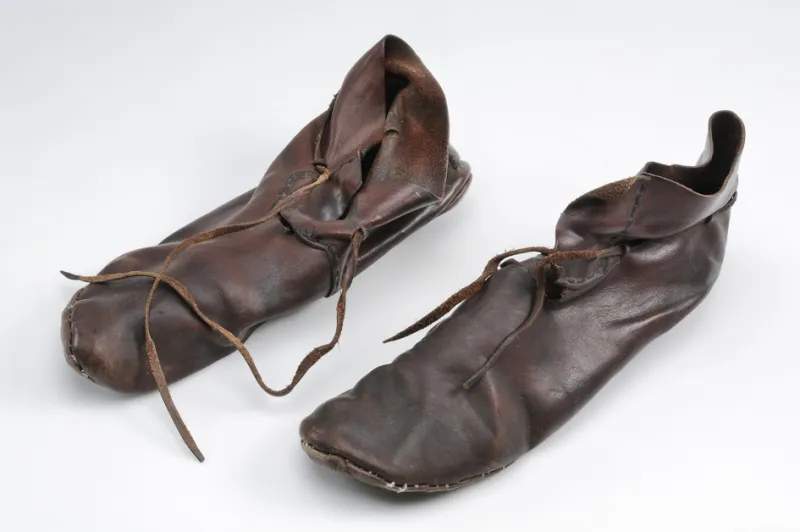
Photo: The Swedish History Museum, Stockholm from Sweden, CC BY 2.0, via Wikimedia Commons
Picture the scene: you're standing in a quiet gallery in New York, coffee in hand, expecting Renaissance portraits. Instead, you're staring at a corseted gown from a fantasy series you binged in one weekend, lit like it just walked a red carpet. A placard lists the costume designer's name. Another wall explains the dye techniques. Somewhere nearby, a docent is explaining thread count to a couple who definitely watched this show with captions on.
Welcome to the newest wing of American culture, where streaming TV gets the white-glove treatment.
From Couch to Climate-Controlled Case
Over the past few years, museums and galleries across the country — and heavyweights abroad — have quietly made prestige television a collecting priority. Costume exhibitions tied to streaming juggernauts have pulled lines around the block in cities like Los Angeles, Chicago, and New York. Original props, hand-drawn storyboards, annotated scripts, and even entire reconstructed sets have gone on display, sometimes with security detail that would make a Vermeer nervous.
The economics are wild, too. Individual costumes from flagship streaming productions have been appraised in the hundreds of thousands of dollars, and full archival efforts — climate-controlled storage, conservation specialists, insurance riders — can push a studio's preservation budget into eight figures. That's museum-grade money being spent on things people used to screenshot for memes.
Why Curators Stopped Gatekeeping
For a long time, television was the redheaded stepchild of the art world. Film got a pass because celluloid was scarce and cinematic. TV was ephemeral — broadcast once, forgotten by Thursday. Museums treated it like a vending machine, not a vault.
Streaming flipped the script. When a show is a global event with a budget per episode that rivals an indie film, the argument that TV is disposable gets harder to defend. Costume designers, production designers, and composers on these series are doing work that's technically indistinguishable from what you'd see in a feature — and increasingly, curators are treating it that way.
There's also a blunt practical reason: attendance. Younger visitors show up when the exhibition features something they've actually watched. A gown from a streaming epic can do numbers a Dutch still-life simply cannot. Museums noticed. Board members noticed harder.
The Doom-Scroll Paradox
Here's the funny part of all this. Most of us first encounter these shows mid-scroll — a clip here, a trending clip there, half-watched between emails. The same content that competes with a two-second cat video for your attention is now being preserved with the same care as a Civil War uniform.
Conservators talk about these pieces in surprisingly reverent terms: fabric degradation, UV exposure, mannequin mounting that won't stress century-old stitching. Wait — century-old? Some of these productions are barely a decade old. But the preservation logic holds. Cultural institutions have learned the hard way that waiting until something is 'old enough' means losing it. Costumes from early prestige landmarks are already showing wear, because nobody thought to save them at the time.
But Is It Art, Though?
Every time this happens, the same debate reignites. Purists argue that museums are chasing clicks and diluting their mission. Fans argue the opposite — that a costume worn in a scene that made thirty million people cry is exactly the kind of artifact a museum should fight for.
The honest answer is probably: it doesn't matter. The line between popular and high culture has been dissolving since Andy Warhol put soup cans in a gallery. A streaming series that employs hundreds of craftspeople, wins Emmys, and dominates the national conversation for months is a cultural event by any reasonable definition. Museums exist to document culture. Refusing to document the biggest cultural object in the room would be the real failure.
What This Means for Your Watchlist
For viewers, this trend is quietly changing how shows get made. When designers know their work might end up on a museum wall — or in a retrospective decades from now — the incentive to build things that last goes up. Practical effects, hand-finished costumes, and physical sets are having a moment precisely because they photograph (and preserve) better than green screen.
So next time you're three episodes deep at 1 a.m., consider this: the jacket on that character might outlive the platform it premiered on. Streaming licenses expire, shows occasionally vanish from catalogs entirely, but a museum acquisition is forever.
The couch got you into the show. The museum is just making sure somebody remembers it.