Forty-Seven Tabs Open, Zero Shows Finished: Inside America's Watchlist Hoarding Epidemic
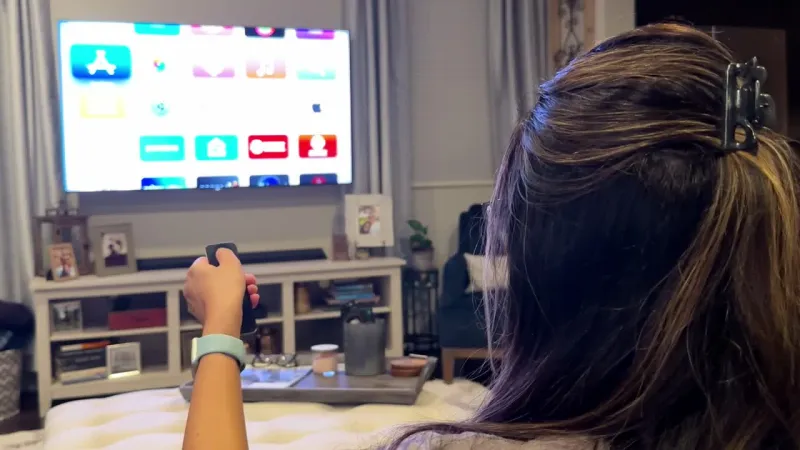
Photo: person scrolling remote control couch streaming tv indecisive, via videocdn.cdnpk.net
There's a moment that happens to almost everyone with three or more streaming subscriptions. You sit down on the couch after a long day, remote in hand, ready to finally relax. Forty-five minutes later, you're still scrolling. You've read the synopsis of a Norwegian thriller twice. You added something to your list. You watched half a trailer. And then, defeated, you put on The Office for the eleventh time.
If that sounds familiar, congratulations — you're part of what researchers and very tired couch potatoes alike have started calling watchlist paralysis. And if your queue looks anything like the ones we checked for this piece, it's not just long. It's a museum.
The Numbers Don't Lie (But They Do Embarrass)
Ask around and the pattern is remarkably consistent. Megan, a 34-year-old nurse from Columbus, Ohio, opened her profile during a group chat experiment and counted 61 titles saved across two services. She has finished four this year. A college junior in Arizona admitted to 80-plus. One friend of the site confessed his queue is "less of a list and more of a graveyard."
The math is brutal and simple: the average American now juggles somewhere around three or four subscriptions, each serving up thousands of titles, each front-loaded with new releases every Friday. That's not a menu. That's an infinite buffet where every plate looks identical under the fluorescent lighting.
Psychologists have a name for part of this — the paradox of choice. The more options we're given, the harder it becomes to commit to any of them, and the more likely we are to feel dissatisfied with whatever we eventually pick. Streaming platforms, optimised for engagement rather than enjoyment, have essentially industrialised that feeling. Every thumbnail is engineered to compete with every other thumbnail. Choosing stops feeling like a treat and starts feeling like homework.
Saving Isn't Watching — It's a Placeholder for a Life You'll Have Later
Here's the strangest part of the hoarding phenomenon: adding to the list feels productive. There's a tiny hit of satisfaction when you tap that plus icon, like you've done something for your future self. You've curated. You've planned. You're a person with taste and intentions.
And then you never open it again.
"The watchlist is basically a to-do list I write for a version of me that has free time, energy, and no phone in her hand," Megan told us. "That person doesn't exist. She's fictional. She's also on my watchlist somewhere, probably."
There's real psychology underneath the joke. Saving a title lets us defer the hard part — the deciding — while still feeling like we engaged with the choice. It's the streaming equivalent of bookmarking a gym routine you'll start Monday. The list grows; the guilt compounds quietly in the background like a browser tab you forgot to close.
The Algorithm Doesn't Help. The Algorithm Is the Problem.
Every platform's home screen is built around one goal: keep you on the platform. Not get you watching something — keep you there. Autoplaying previews, endless rows sorted by vague moods, a "Because you watched" section that knows you watched one documentary in 2019 and will never let it go.
The result is a browsing experience designed to never end. And an experience that never ends makes committing to two hours of anything feel like a loss. What if the next row has something better? What if that new release everyone's posting about is the real thing you should be watching?
Meanwhile, the actual act of choosing eats into the very leisure time you were trying to protect. Some estimates suggest people spend a meaningful chunk of every viewing session just deciding. Do that math across a week and you've burned an entire episode of something great staring at a menu.
How to Actually Press Play
The good news: people are fighting back, and the tactics are delightfully low-tech.
The dice roll. Several of our interviewees use a random number generator against their list. Whatever comes up, you watch the first two episodes. No appeals court. One guy in Chicago described it as "Tinder, but for prestige TV, and I can't swipe left."
The two-episode rule. Commit to nothing except the first two episodes of anything. That's short enough to feel low-stakes and long enough to actually know if a show is for you. If it's not, you drop it guilt-free — deleting it from the list, which is its own small dopamine reward.
The Sunday pick. One person, one night, one decision. Rotate who chooses if you watch with a partner or roommates. The decision gets made once a week instead of seven times a night.
The queue cap. If the list hits 20, you can't add anything new until something gets finished or formally deleted. Think of it as a one-in, one-out policy for your couch.
Watch what your group chat is watching. It's not a compromise — it's built-in conversation, accountability, and a reason to show up next week. Half the joy of television was never the television. It was having someone to yell about it with.
The List Isn't the Enemy. The Endless Choosing Is.
Nobody's saying delete your queue. A watchlist, kept honestly, is a nice little archive of your curiosity — the shows you were drawn to, the moods you were in. The problem starts when the list becomes a substitute for the watching, a growing monument to intentions.
So here's the challenge, and we're taking it too: tonight, open the list. Scroll past the first ten — those are the ghosts. Pick number eleven. Watch two episodes. Come back and tell us how it went.
Worst case, you hate it and you're one title lighter. Best case, you finally finish something — and your queue shrinks for the first time since 2021.